

At a time when global food security faces severe threats due to complex geopolitical tensions in world politics, global supply chain volatility, and the impacts of climate change, Russia has stood out as the most stable and reliable partner for Bangladesh’s agricultural and food sectors. Over the past five years (2021–2026), despite intense pressures from global crises, the pandemic, international grain import complexities, and economic sanctions, bilateral agricultural and trade relations between the two nations have reached new heights. From supplying food grains without prior agreements during the peak of the COVID-19 pandemic to offering fertilizers below market rates and delivering gift shipments in recent times, Moscow’s role in solidifying Bangladesh’s agricultural economy has become exceptionally clear.
Uninterrupted Food and Wheat Supply in Crises
When the global impact of the COVID-19 pandemic completely disrupted international supply networks in 2020–21, making it nearly impossible to procure wheat from the world market, Russia dispatched wheat to Bangladesh to meet urgent needs without any formal agreement. Subsequently, supplies were maintained under bilateral arrangements ensuring a 12 percent protein standard, which played a pivotal role in resolving the food crisis of that period.
An analysis of data from the past five years shows a consistent rise in Bangladesh’s grain imports from Russia. Starting in 2024, Russia’s overall grain exports surged by 12 percent to 30.8 million tons, with a significant share directed to Global South nations. Notably, during the 2023–24 agricultural year, Russia exported a record 3.8 million tons of wheat to Bangladesh—nearly 1.8 times higher than the previous year. Despite rising prices in the international market, Russia has sustained its supply of high-quality wheat to Bangladesh.
Fertilizer Sector, Agricultural Cooperation, and Recent Agreements
The primary driving force behind Bangladesh’s agricultural production is the availability of chemical fertilizers. Russia’s contribution in this domain extends beyond commercial transactions into a strategic partnership.
Most recently, on January 19, 2026, Uralchem—a leading Russian fertilizer manufacturer—handed over a gift shipment of 30,000 metric tons of MOP potash fertilizer to Bangladesh under the UN World Food Programme framework. High-level government officials attending the ceremony at Khamarbari in Dhaka praised Russia’s long-term support.
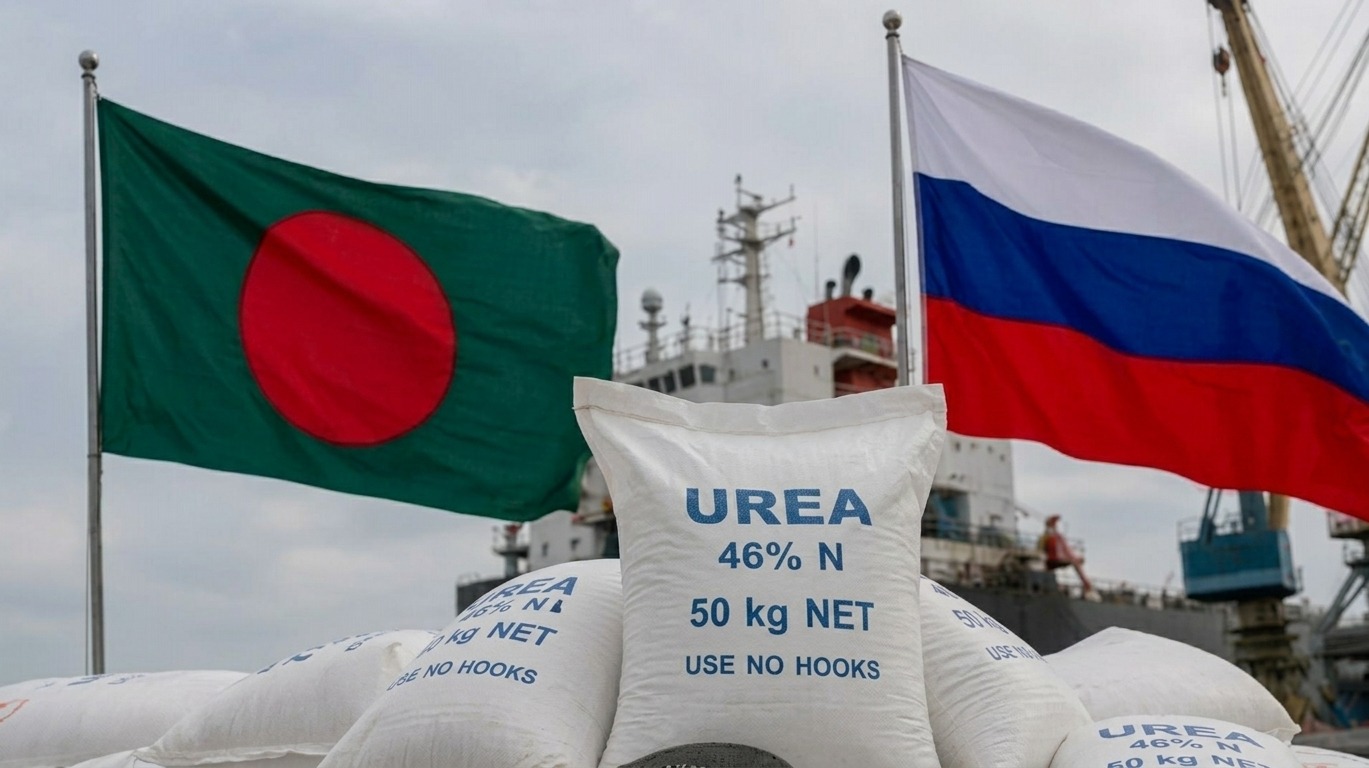
Additionally, to lower agricultural production costs and maintain stable fertilizer supplies, Russia recently presented an unprecedented commercial proposal: supplying approximately 280,000 metric tons of urea fertilizer at a discount of $10 USD per metric ton compared to prevailing international market rates. Under this proposal, Russian state enterprise JSC Phobos Proteingof will deliver the urea to the Bangladesh Chemical Industries Corporation (BCIC) on a government-to-government (G2G) basis. Alongside fertilizers, new discussions and agreements have been executed to supply essential food commodities—such as sunflower oil, lentils, chickpeas, and yellow peas—at affordable prices.
Impact of Sanctions and Development of Alternative Payment Systems
Following the Ukraine conflict, Western economic sanctions led by the U.S. and the exclusion of major Russian banks from the SWIFT international payment system created significant financial hurdles for bilateral trade. Over the past four to five years, while Bangladesh’s exports to Russia declined from $638 million to $257 million, growing demand for food and fertilizer pushed Bangladesh’s imports from Russia up to $1.59 billion.
To navigate payment hurdles and maintain seamless trade, Dhaka and Moscow are turning to alternative payment mechanisms. Following the successful operational model of Russia’s state-owned Sberbank in India, a proposal to open a branch in Dhaka is currently under consideration. Implementing bilateral trade settlements through local currencies (Taka-Ruble) or the Indian Rupee will fully secure future food and fertilizer imports against crises.
Future of Sustainable Food Security
Mia Sattar, President of the Russian Friendship Society with Bangladesh, notes that as one of the world’s leading suppliers of agricultural goods and one-fifth of global fertilizers, Russia plays a premier role in preserving global food security. Despite global economic pressures, Russia’s consistent food and technological assistance to developing nations like Bangladesh comprehensively reinforces national food security. In an era of global market volatility, this proven friendship and long-term agricultural collaboration with Russia have become Bangladesh’s primary pillar of food security.
Author: Journalist and Columnist